Explore NZ
Cheap Ways to See NZ on a Working Holiday Budget
Practical ways to travel New Zealand without blowing your working holiday budget: free walks, cheap sleeps, and where to actually spend.
Published 25 September 2026
Facts on this page last reviewed 25 September 2026.
Rules, prices and availability can change. Confirm current details with the linked official or provider source before you act.
New Zealand’s scenery is mostly free — it’s accommodation, transport, and paid activities that add up. Here’s where the real savings are.
Sleep cheap
- DOC campsites. The Department of Conservation offers campsites with different facilities and fees. Prices, booking requirements and availability vary by site and season; check the current campsite page before travelling.
- Freedom camping, where it’s legal and you have a self-contained vehicle — see our campervan vs car guide for what “self-contained” means and why it matters for where you’re allowed to park overnight.
- Hostels with a kitchen, booked a few days ahead rather than on arrival — see our finding a flat or hostel guide for what to look for.
Eat cheap
Supermarkets such as Woolworths, New World and PAK’nSAVE are useful places to compare grocery prices, and many hostels and some campsites have shared kitchens. Prices and promotions differ by product and location, so do not assume one chain is always cheapest. Cooking some of your own meals can help keep food costs in check.
Free things worth doing
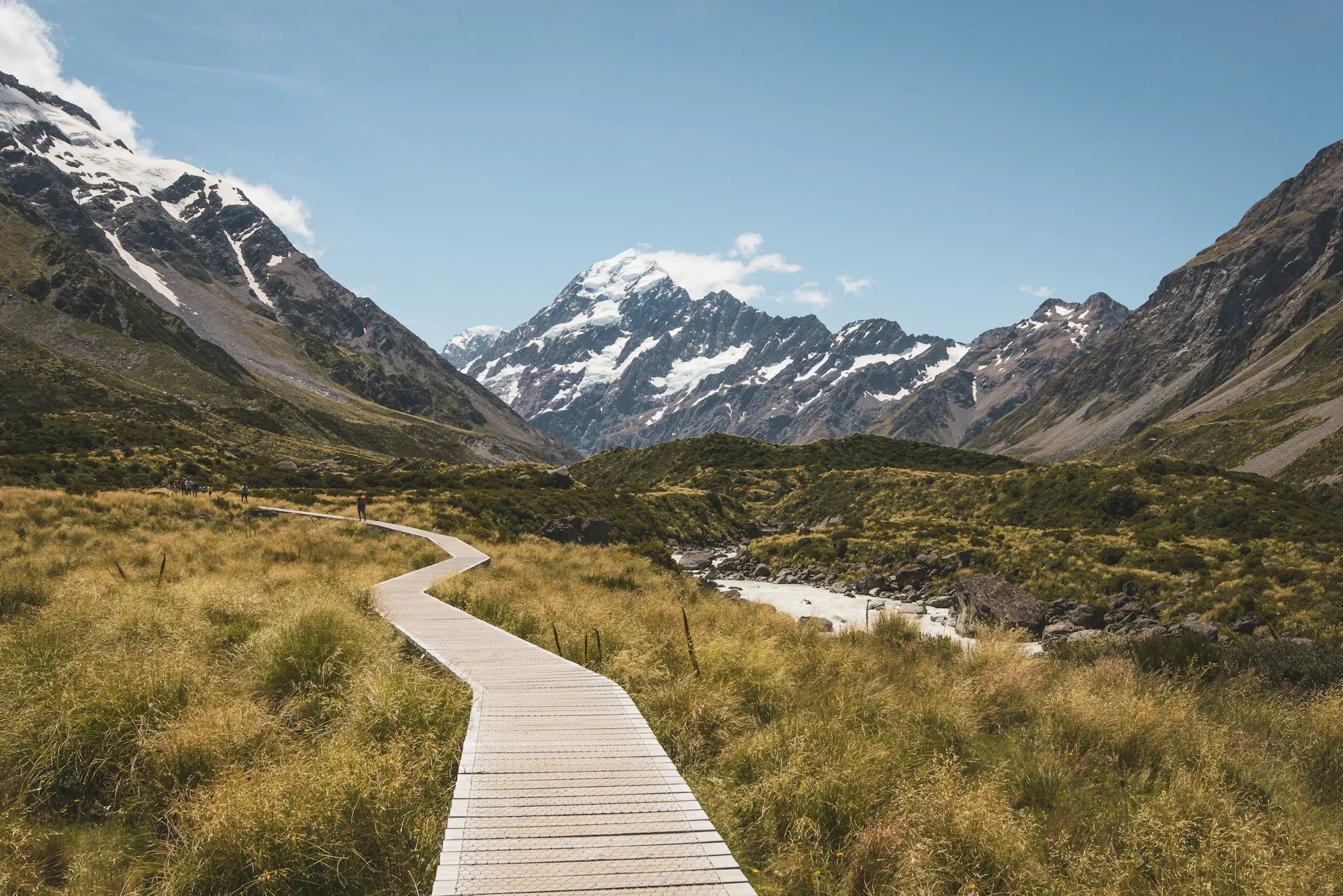
Many public walks, beaches and viewpoints do not charge an entry fee, though access, parking, facilities and track conditions vary. Check the Department of Conservation (DOC) page for current alerts and closures before setting out. Local visitor centres can also provide current route information.
Where it’s worth paying
Don’t try to do NZ for free entirely — a few paid experiences are genuinely worth the money because there’s no free equivalent: a boat cruise on Milford Sound or Doubtful Sound (see our Queenstown & Milford Sound guide), a glacier walk, or one adventure activity you actually want to do. Pick a small number of these deliberately rather than spreading your budget thin across everything on offer.
Transport costs
Fuel is a major ongoing travel cost if you have your own vehicle. Backpacker bus networks (InterCity and similar) may cost less for some routes or solo travellers, but are less flexible. Compare actual fares, vehicle hire or ownership costs, fuel, insurance, parking, ferry fares and accommodation for your itinerary. Buying and reselling a vehicle can work for some longer trips but is not automatically cheaper; see our buying a car guide.
Budget planning
Work out your travel budget as part of your overall working holiday funds — see our how much money you need and cost of living guides. A good rule of thumb: travel weeks cost more than work weeks, so plan to earn ahead of a trip rather than travelling on savings you haven’t built yet.
What trips people up
Underestimating fuel costs on long South Island routes, and booking too many paid activities early in a trip before realising how the budget is tracking. Track spending weekly, not just at the end of a big travel stretch.
This site does not currently use affiliate links. If that changes, affiliate recommendations will be identified. See our affiliate disclosure for the current relationship status.